

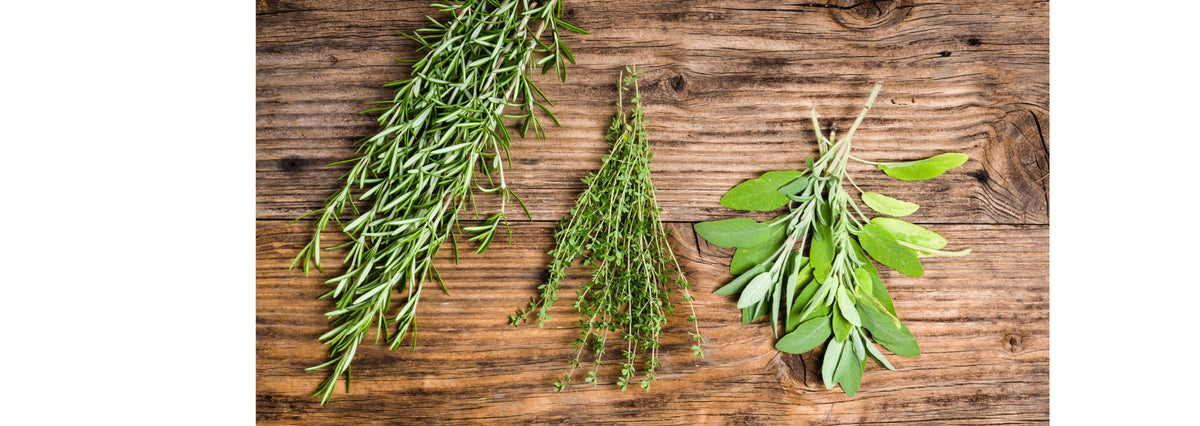
When Thanksgiving rolls around, kitchens fill with the comforting smells of turkey, stuffing, and other holiday dishes. But behind many of those familiar flavors are three remarkable herbs with histories stretching back thousands of years: sage, rosemary, and thyme.
While we often think of them as simple seasonings, these herbs have been valued for centuries in traditional medicine, cooking, and cultural practices. Today, scientists are discovering just how fascinating their natural compounds really are. So before you sprinkle them into your favorite holiday recipes, let's explore what makes these three herbs so special!
Sage: The Ancient Herb Associated With Wisdom
Sage (Salvia officinalis) has been treasured since ancient times, particularly throughout the Mediterranean region. The Romans valued sage for its traditional medicinal uses, and its name comes from the Latin word salvare, meaning "to heal" or "to save." Historically, sage was used in preparations associated with digestion, throat discomfort, and general well-being.
Modern science says that sage contains naturally occurring compounds, including rosmarinic acid, flavonoids, and other polyphenols, which have attracted scientific attention for their antioxidant properties. According to the National Institutes of Health, a few small human studies suggest that certain sage preparations may influence memory, attention, and menopausal symptoms. Sage has been associated with wisdom and longevity for centuries, making it an especially interesting herb to explore during a season of gratitude and reflection.
Rosemary: A Symbol of Remembrance With Fascinating Chemistry
Rosemary (Salvia rosmarinus) is another Mediterranean herb with an extraordinary history. Ancient Greeks and Romans associated rosemary with memory and remembrance. Over time, it became a symbol of loyalty, friendship, and remembrance in various European traditions.
Today, rosemary is best known for its distinctive aroma and its ability to add depth to roasted vegetables, poultry, and potatoes. However, it is more than just a good flavor, because rosemary also contains carnosic acid, carnosol, and rosmarinic acid, which are compounds studied for their antioxidant and anti-inflammatory activity.
A 2025 scientific review examined rosmarinic acid and its potential biological effects, including its interactions with oxidative and inflammatory processes. While much of this research remains experimental, it helps explain why rosemary continues to attract interest beyond the kitchen.
Thyme: A Tiny Herb With a Powerful History
Thyme (Thymus vulgaris) may have small leaves, but its history is anything but small! Ancient Egyptians, Greeks, and Romans used thyme in culinary, aromatic, and traditional medicinal practices. The ancient Greeks associated thyme with courage, while later European traditions connected the herb with strength and protection.
Thyme contains a naturally occurring compound called thymol, which contributes to its distinctive aroma. Scientists have studied thymol and another compound, carvacrol, for antimicrobial and antioxidant activity, primarily in laboratory settings.
Although these findings are interesting, eating thyme hasn't been proven to prevent infections or treat respiratory illnesses. Still, thyme remains a flavorful way to incorporate a variety of plant compounds into everyday meals.
What Do All Three Herbs Have in Common?
Besides being Thanksgiving favorites, sage, rosemary, and thyme all belong to the mint family, Lamiaceae. Each contains aromatic compounds and polyphenols that researchers continue to investigate for their biological properties.
Together, they illustrate an important connection between traditional herbal knowledge and modern science: plants valued for centuries can contain complex substances that scientists are only beginning to understand. There's another practical benefit because using flavorful herbs can help reduce the need for excess salt in some recipes, making them a delicious addition to a balanced diet.
A Little Extra Wellness on Your Thanksgiving Table
This Thanksgiving, consider giving these familiar herbs a little more attention. Maybe add fresh rosemary to roasted potatoes, mix sage into homemade stuffing, or sprinkle thyme over vegetables and soups. These small additions bring wonderful flavors, aromas, and naturally occurring plant compounds to your holiday meals.
At proBLENopathy, we believe that learning about nature and the ingredients around us is an important part of making thoughtful wellness choices. Sometimes, the most interesting discoveries about wellness are already sitting in your spice cabinet!


