

UNDERSTAND HOMEOPATHY

Safe and Natural
Homeopathy is a safe and natural system of healing that operates around this basic principle—with the right support, the human body can restore and heal itself. For more than two centuries, homeopathic remedies have been created and used to activate the body’s self-healing abilities. An 18th-century German physician named Samuel Christian Hahnemann founded homeopathy under the theory that “like cures like” (a principle more commonly known as the Law of Similars). Homeopathic remedies to aid your wellness. Homeopathic remedies are safe and, in most cases, available without a prescription because the dilution and succession process limits the potency of any toxic substances in the active ingredients, while still providing enough of each ingredient you need to aid your wellness.

Understanding Dilution and Potentization
The term "dilution" is used to describe the homeopathic preparation process, but the term can be misleading. A substance that has been diluted without succussion is simply a weaker solution. This means that it has not been potentized and does not function or classify as a homeopathic remedy.
Medicinal properties are developed through the mechanical action of succussion, not through dilution alone. In homeopathy, the preferred term is potentization, which encompasses both dilution and succussion.
- Potentization: The complete preparation process of dilution combined with succussion.
- Succussion: The constant shaking that accompanies dilution at each step
Homeopathic remedies to aid your wellness
Homeopathic remedies are safe and, in most cases, available without a prescription because the dilution and succession process limits the potency of any toxic substances in the active ingredients, while still providing enough of each ingredient you need to aid your wellness.
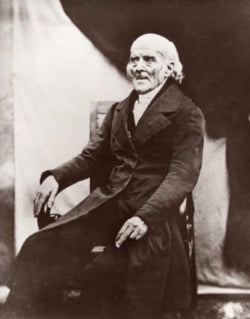
Dr. Hahnemann's Discovery
Dr. Hahnemann discovered that a substance that produces symptoms characteristic of an illness can cure that same illness. If large amounts of an ingredient cause a symptom in a healthy person, then small amounts of that same ingredient can be used to stimulate the individual’s natural healing powers.
Typically derived from natural sources such as plants, minerals, herbs, and animal products, each ingredient in a homeopathic remedy must undergo an extensive dilution process before use. Dr. Hahnemann knew when he first started developing his remedies, that dilution would be necessary because some of his ingredients were poisonous. However, he discovered that diluting remedies after dissolving them in alcohol or water made them more effective.
This process is now known as potentisation. It happens between each dilution and makes each homeopathic ingredient stronger than it was before the dilution process. Another process, known as succession, involves shaking remedies vigorously in order to activate the diluted substance. After both of these processes are completed, there will be only a few molecules of the original substance remaining. In homeopathy, the more diluted a substance is, the more potent it’s believed to be. When reading the labels on homeopathic remedies, you can find out more about the dilution process of each of the ingredients.
For example, a plant substance that has been diluted at a 1:10 ratio and succussed 12 times will be labeled 12X. If it has been diluted more it will be labeled differently. Potencies are available as 1:10 ratio (labeled X), 1:100 ratio (labeled C), or a 1:50,000 ratio (labeled LM). There are a few other labels, such as “K” and “CK” which indicate that a special manufacturing process called the Korsakovian Method was used to dilute the ingredients.
