

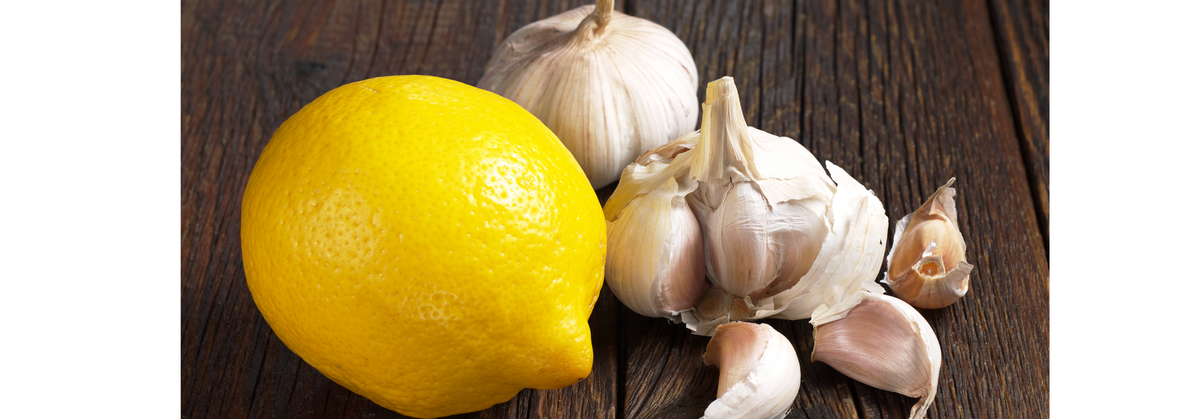
One is bright, tart, and refreshing. The other is pungent enough to announce itself from across the kitchen. Yet lemons and garlic share something fascinating: humans have valued both for centuries, not only as foods, but as part of traditional approaches to health.
Welcome to part 3 of our Everyday Wellness series, where we explore the surprising science behind familiar foods and beverages. We started with coffee, moved on to dark chocolate, and now we're finishing with two ingredients you probably already have in your kitchen: lemon and garlic.
Lemon and the Famous Fight Against Scurvy:
Citrus fruits have one of the most important stories in nutrition history.
During long sea voyages, sailors frequently developed scurvy, a potentially fatal disease that we now know results from severe vitamin C deficiency. In 1747, Scottish physician James Lind conducted a famous experiment aboard HMS Salisbury in which sailors suffering from scurvy were given different dietary treatments. The men who received oranges and lemons experienced the most striking improvement.
It would take much longer for scientists to discover vitamin C and understand exactly why citrus worked, but Lind's experiment became an important chapter in the development of clinical research.
Today we know that vitamin C is essential to normal human health. The body needs it to produce collagen, which supports skin, blood vessels, cartilage, bones, and wound healing. Vitamin C also contributes to normal immune function and acts as an antioxidant.
There's More to Lemons Than Vitamin C:
Lemons also contain naturally occurring plant compounds, including flavonoids.
Researchers continue to investigate citrus flavonoids for their biological properties and potential relationships with cardiovascular and metabolic health. However, much of this research is still developing, so it's important to distinguish promising laboratory and clinical findings from proven disease-prevention effects.
Another well-established benefit is that vitamin C can improve the absorption of non-heme iron, the form of iron found in plant foods. Pairing a source of vitamin C with foods such as beans, lentils, or leafy greens can therefore help your body absorb more of their iron.
Garlic's History Goes Back Thousands of Years:
Garlic's health-related reputation is even older. Evidence of garlic's use stretches back thousands of years, and historical records describe it in several ancient cultures. Civilizations including Egypt, Greece, Rome, China, and India used it as both food and medicine.
The ancient Greek physician Hippocrates, traditionally called the "father of medicine," was among the historical figures associated with garlic's medicinal use.
Today, scientists have a much better idea of what makes garlic so chemically interesting.
What Happens When You Crush Garlic?
Here's something you can actually observe in your own kitchen.
An intact garlic clove contains a sulfur-containing compound called alliin and an enzyme called alliinase. When you chop, crush, or chew garlic, the clove's cells are damaged, allowing these substances to interact.
The result is allicin, one of the compounds responsible for freshly crushed garlic's unmistakable aroma.
Allicin is unstable and quickly produces other sulfur-containing compounds, collectively making garlic a surprisingly complex subject for researchers.
What Does Current Research Say?
One of the most extensively studied areas is garlic's relationship with cardiovascular health, particularly blood pressure.
A 2020 systematic review and meta-analysis of randomized controlled trials found that garlic supplements were associated with reductions in blood pressure among people with hypertension. The researchers also reported potential improvements in some cardiovascular markers.
More recent research continues to examine garlic and its preparations for effects on blood pressure, cholesterol, inflammation, and other aspects of cardiovascular and metabolic health.
That doesn't mean adding extra garlic to dinner treats high blood pressure or heart disease. Studies can use specific garlic preparations, concentrations, and doses that aren't equivalent to ordinary culinary garlic. But the research helps explain why this ancient ingredient still attracts scientific attention.
Sometimes Wellness Really Is in the Kitchen:
Lemon and garlic are a fitting way to finish our series because neither is rare, exotic, or difficult to find.
A squeeze of lemon provides vitamin C and an assortment of naturally occurring plant compounds. Crushing a garlic clove triggers a chemical reaction that creates an entirely new collection of compounds.
That's really what our Everyday Wellness series has been about.
Coffee showed us how caffeine and plant compounds can interact with the brain and body. Dark chocolate introduced us to cocoa flavanols and their relationship with circulation. Lemon showed the importance of vitamin C, while garlic showed how something as simple as crushing a plant can spark fascinating chemistry.
Healthy living doesn't always start with something complicated. Sometimes, understanding what's already in your cup, on your plate, or sitting in your kitchen can give you a whole new appreciation for the foods you consume every day.


